CGI vs AI: differences, advantages, and how to choose for image production and visual communication
CGI or AI? A clear analysis of differences, advantages, and use cases to choose the right technology for image production and visual communication.
CGI vs AI: differences, advantages, and how to choose for image production and visual communication
In recent years, terms such as AI, generative AI, and CGI (Computer-Generated Imagery) have become firmly embedded in the vocabulary of architects, designers, brands, and marketers working in digital visual communication and image production. While scrolling through social media, it’s easy to come across high-impact images generated by artificial intelligence, and at the same time, clients and companies are beginning to ask whether AI can truly replace traditional CGI.
The real question, however, is not whether AI will replace CGI, but when to use CGI and when to use AI, depending on project goals, the level of creative control required, the expected visual quality, and the need for long-term brand consistency.
In this article, we analyze the topic of CGI vs AI in a clear and pragmatic way, to help you choose the solution best suited to your visual communication projects. If you’d like to learn more, feel free to contact us to request a no-obligation consultation with Ophir Studio.
Why everyone is talking about CGI vs AI today
Interest in AI has surged thanks to its ability to generate images, videos, and concepts in just a few seconds. This has had a significant impact, especially in architecture, design, product development, and visual marketing, where production speed is often a critical factor.
At the same time, CGI continues to represent the professional standard for projects that require reliability, technical accuracy, and full control over the final outcome. The comparison between CGI and AI therefore stems from a concrete need: understanding which technology to use based on budget, delivery timelines, project complexity, and the long-term value of visual assets.
What Artificial Intelligence (AI) means in image creation
When we talk about AI in the context of visual communication, we are mainly referring to generative AI for images. These systems are based on machine learning and deep learning models trained on massive visual datasets, capable of generating new images from text prompts, visual references, sketches, or combinations of these inputs. Unlike CGI, AI does not build a three-dimensional scene based on real geometry, but instead synthesizes a plausible image by combining patterns learned during training.


How generative AI works
From an operational standpoint, the user provides a textual description or a reference image, and the model returns one or more images consistent with the request. The process is fast, iterative, and highly flexible, making AI a very effective tool in the early creative stages. Among the main generative AI tools for images and video are platforms such as Midjourney, Runway, and Nano Banana.
Advantages and limitations of AI in content production
AI is particularly useful during ideation and concept design; for rapid exploration of moods and visual styles; for creating variations for internal presentations; and for producing content for social media and high-volume campaigns.
Despite often impressive results, AI presents structural limitations:
- limited control over geometry, proportions, and technical details;
- inconsistencies between images within the same project;
- difficulty maintaining consistent brand identity;
- uncertainty around copyright and usage rights;
- risk of visually convincing outputs that are not realistic from a design or engineering standpoint.

What CGI (Computer-Generated Imagery) is and why it’s central to 3D visualization
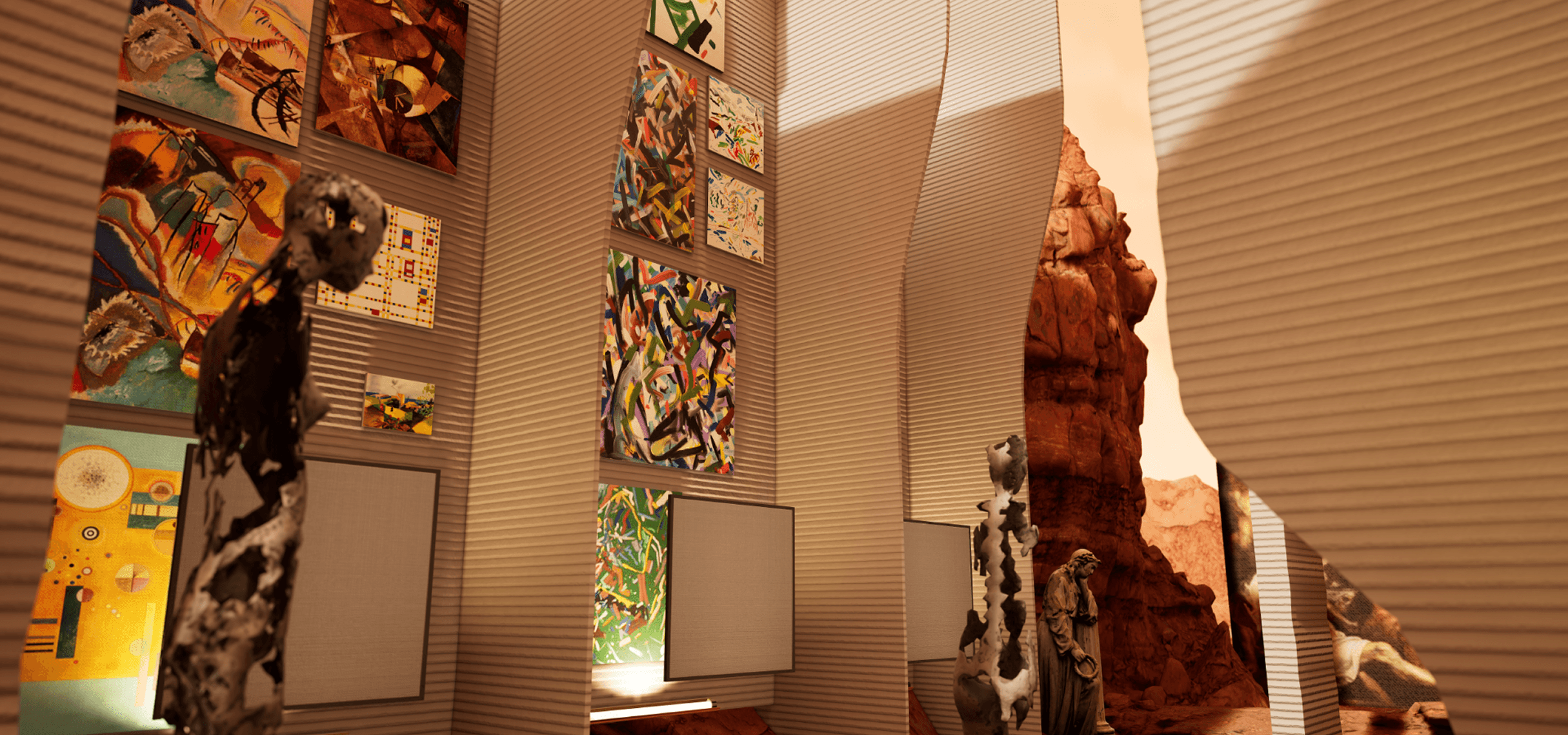
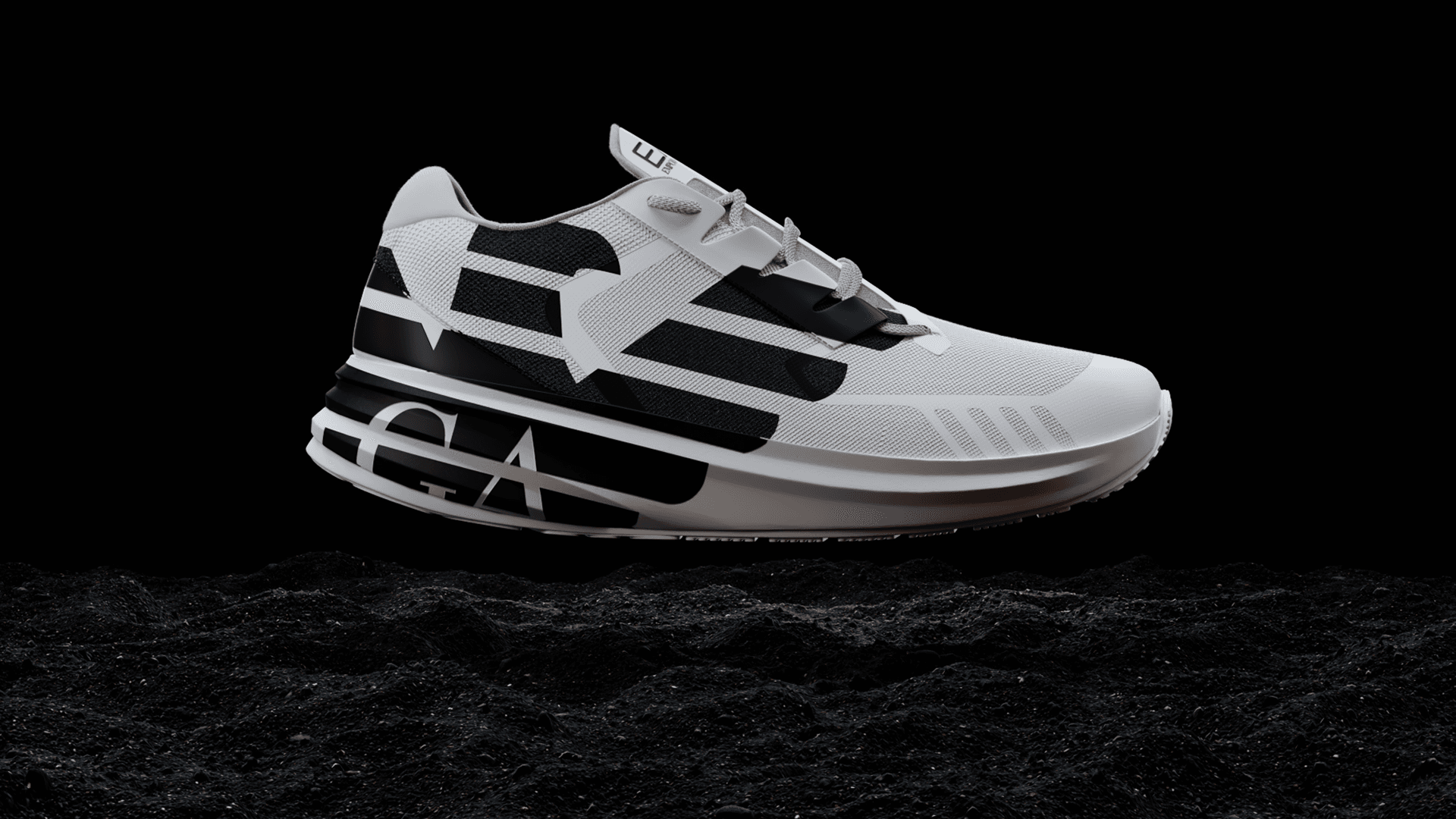
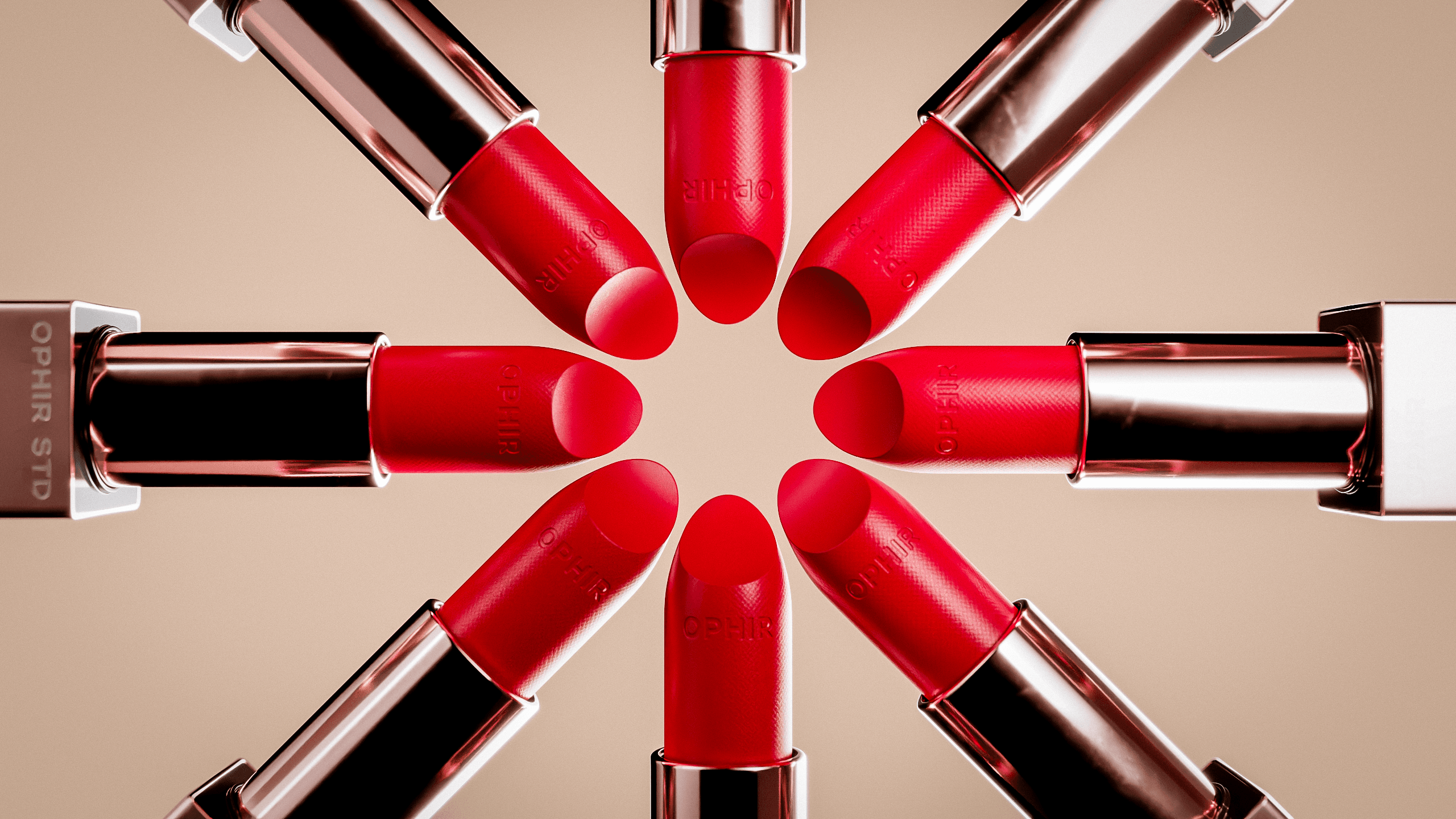
CGI is a 3D visualization and digital image production process based on professional software such as Unreal Engine, Blender, Cinema 4D, Maya, or 3ds Max. Every element of the image is intentionally built: geometry, materials, lighting, cameras, and final rendering. This approach makes CGI a fundamental tool whenever precision, consistency, and control are essential requirements. Discover Ophir Studio’s 3D visualization services.
How a CGI workflow works
A professional CGI workflow often starts from CAD or BIM files. From there, several phases are developed:
- accurate 3D modeling;
- material and texture definition;
- lighting setup;
- camera and framing selection;
- rendering and post-production.
The result is an image that is faithful to the design choices, replicable, and updatable over time.
Why CGI is still a standard
CGI remains central because it guarantees full control over the final output, visual consistency across multiple images, high technical accuracy, reusable 3D assets, and full compatibility with animations, walkthroughs, and VR content. For these reasons, at Ophir Studio we prioritize CGI as the foundation of our visual communication projects.
Explore our portfolio to see how we apply these principles in real projects.
CGI vs AI: key differences in image production
The difference between CGI and AI becomes clear when analyzing several fundamental factors.
Creative control and accuracy
CGI offers complete control over every detail of the image. AI prioritizes speed and variety, often at the expense of precision.
Visual quality and realism
Both can achieve photorealistic results, but CGI is more reliable when realism must adhere to real technical data.
Consistency and brand safety
CGI ensures visual continuity and brand identity. AI can introduce unwanted or inconsistent variations.
Content ownership and copyright
With CGI, usage rights are clear. With AI, they often depend on the platforms used and their licensing terms.
CGI vs AI: timelines, costs, and required skills
In the CGI vs AI comparison, production time, cost, and result quality are decisive factors.
PRODUCTION SPEED: AI is unbeatable when rapid ideas or concepts are needed: multiple visual proposals can be generated in minutes. CGI requires more initial time, as scenes must be built and rendered. However, once assets are created, producing new images or variants becomes much faster.
COSTS & LONG-TERM VALUE: AI has a low initial direct cost but may involve indirect costs related to quality control, revisions, and brand consistency. CGI requires a higher upfront investment but produces reusable assets, often making it more cost-effective in the long run.
QUALITY & PREDICTABILITY: CGI offers a predictable and controllable level of quality, both in realism and style. AI produces variable results—sometimes excellent, sometimes inconsistent. When accurate and reliable images are required, CGI’s predictability is a key advantage.
Use cases: when to use AI and when to use CGI
Architecture and real estate
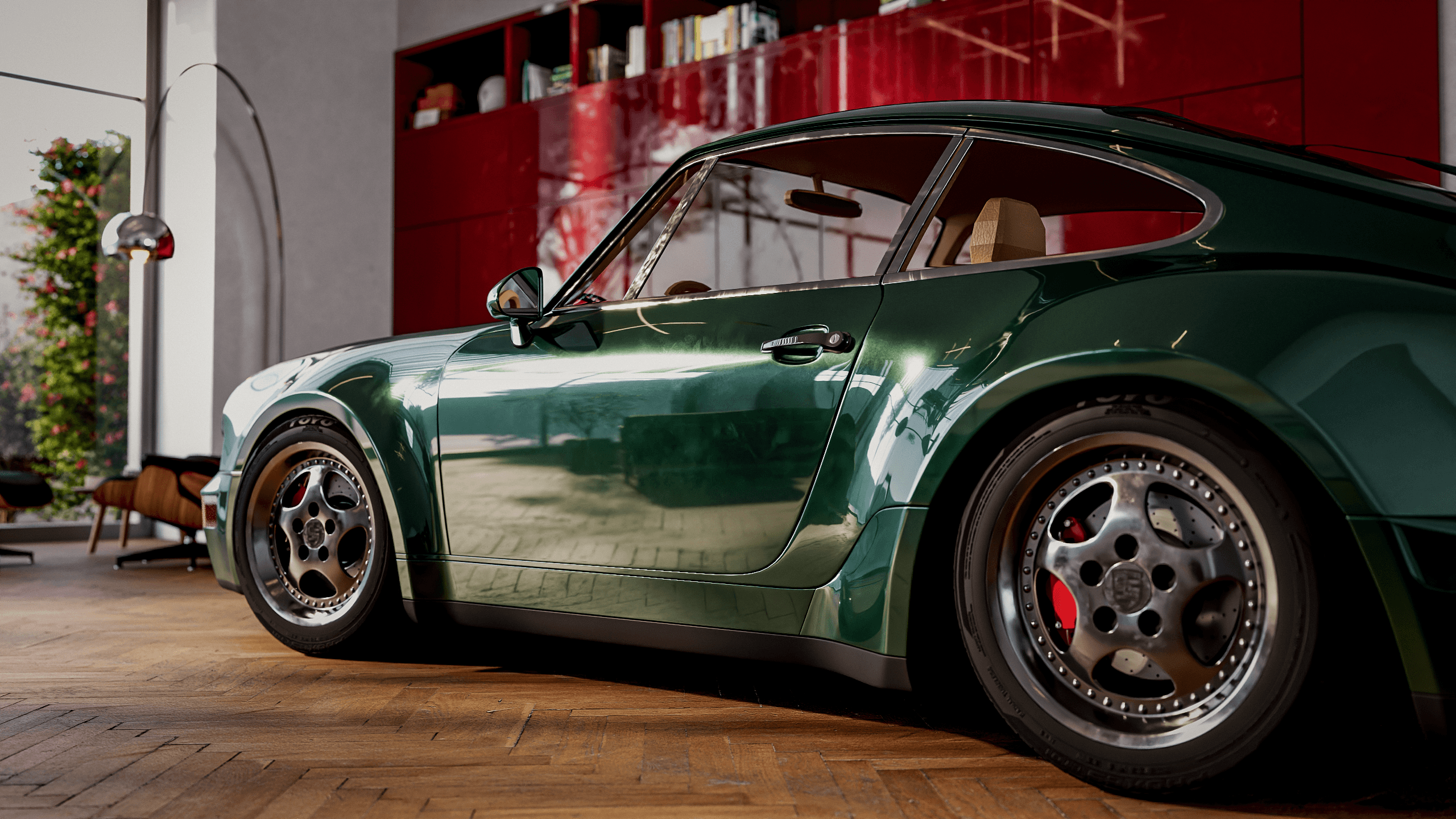
CGI is essential for accurate visualizations, sales materials, and approvals because it reflects real technical data. AI is useful in early phases to quickly explore moods and atmospheres before final production. See how a CGI image for the interior design industry should look in our interior rendering service.

Product design and industry
In product and industrial contexts, CGI ensures fidelity to real shapes, materials, and variants. AI supports fast marketing content and visual concepts but does not replace CGI’s precision.
Marketing and advertising
In marketing and advertising, hybrid workflows are often the best solution: CGI creates premium-quality assets, while AI accelerates adaptations and content for digital channels.
CGI and AI together: the value of hybrid workflows
Today, the most effective approach is hybrid. CGI builds a solid, accurate, and project-consistent foundation, while AI accelerates the creation of visual variations, alternative moods, and creative adaptations. This allows teams to work on a reliable structure while maintaining full control over geometry, materials, and brand identity.
In hybrid workflows, CGI is used to generate high-quality master assets, while AI supports exploration, optimization, and content adaptation across different channels. The result is a more efficient process that combines quality, speed, and scalability—reducing production time without compromising reliability.
How to choose between CGI and AI for your next project
To decide whether to use CGI or AI, it helps to follow a simple decision-making path based on key project questions.
What is the purpose of the image? If the image is intended for sales, approvals, permits, official presentations, or product catalogs, CGI is the safest choice. It ensures reliability, consistency, and full control.
How accurate does the image need to be? If the image must match technical drawings, CAD/BIM files, product sheets, or real SKUs, CGI is essential. AI may introduce elements that are not faithful to reality.
How quickly do you need the result? If you need to quickly explore visual styles, moods, or early creative directions, AI is a great starting point. Once the direction is defined, the project can be finalized using CGI.
Will you need multiple images or variants over time? If you expect to generate new views, versions, materials, or adaptations in the future, investing in CGI from the start is a strategic choice. 3D assets can be reused and adapted without rebuilding everything from scratch.
Do you want an integrated and consistent workflow? In this case, the ideal solution is to work with a studio capable of managing CGI and AI in an integrated way: a solid, brand-consistent CGI base from which optimized AI-driven content can be derived for marketing and social channels.
With this approach, CGI and AI are not alternatives but complementary tools within an effective and sustainable visual communication strategy.
Conclusion: CGI vs AI as a strategic choice
CGI and AI are not competing technologies, but complementary tools. The real difference lies in the strategy behind their use. At Ophir Studio, we integrate advanced CGI and AI within thoughtful workflows to create visual content that is effective, reliable, and results-driven. In this context, it’s not the technology itself that makes the difference, but the ability to govern it with expertise, vision, and creative sensitivity. Only then do CGI and AI become truly effective tools capable of supporting business, marketing, and communication goals in a measurable and sustainable way.
Choosing Ophir Studio means relying on a partner who can guide you in selecting the most suitable technology for each project, transforming images and visual content into strategic assets with real value. Contact us!
FAQ
Will AI replace CGI?
No. AI and CGI have different roles. AI is ideal for rapid concepts and experimentation, while CGI remains essential for precision, control, and professional visual production. They are complementary technologies.
Can AI be used in CGI?
Yes. AI can support CGI workflows by accelerating concept creation, variations, and early creative phases, but it does not replace structured 3D modeling and rendering.
What are the four types of AI?
The main types of AI are:
- Reactive AI
- Limited memory A
- Theory of mind AI
- Self-aware AI
In visual production, limited memory AI is the most commonly used.
What does CGI mean?
CGI stands for Computer-Generated Imagery and refers to the creation of images and animations using 3D software, with full control over geometry, materials, lighting, and cameras.
Is CGI better than AI?
It depends on the objective. AI is fast for concepts and variations, while CGI is more reliable for accurate, consistent, and brand-safe images. Often, a hybrid approach is the best solution.
Contact us!